Engineering Portfolio
Systems built to automate, scale, and solve real-world inefficiencies.
Full-Stack Cloud Automation & API Integration
Daily Weather Alert System
Forgetting to manually check the weather app in the morning leaves you unprepared for the day. I needed a reliable, automated system that pushes a personalized forecast directly to my inbox before I wake up, removing the need for manual polling entirely.
A microservice-inspired architecture using Flask and React. It bypasses datacenter SMTP blockades via the Brevo REST API and utilizes a keep-alive cron mechanism to prevent cold-start timeouts for instant automated dispatch.

Inspect Node
Technical Implementation
- ■Engineered a custom socket diagnostic tool to uncover Render's network-level SMTP (Port 587) firewall blockade.
- ■Pivoted architecture to utilize the Brevo REST API, shifting email payloads to HTTPS (Port 443) to guarantee 100% delivery.
- ■Implemented a 10-minute automated keep-alive polling mechanism to bypass 504 Gateway Timeouts caused by serverless cold starts.
- ■Refactored the React frontend with asynchronous UI states to prevent database pollution from repeated API calls during server wake cycles.
Architectural Tradeoffs
AI Systems & Video Processing Pipeline
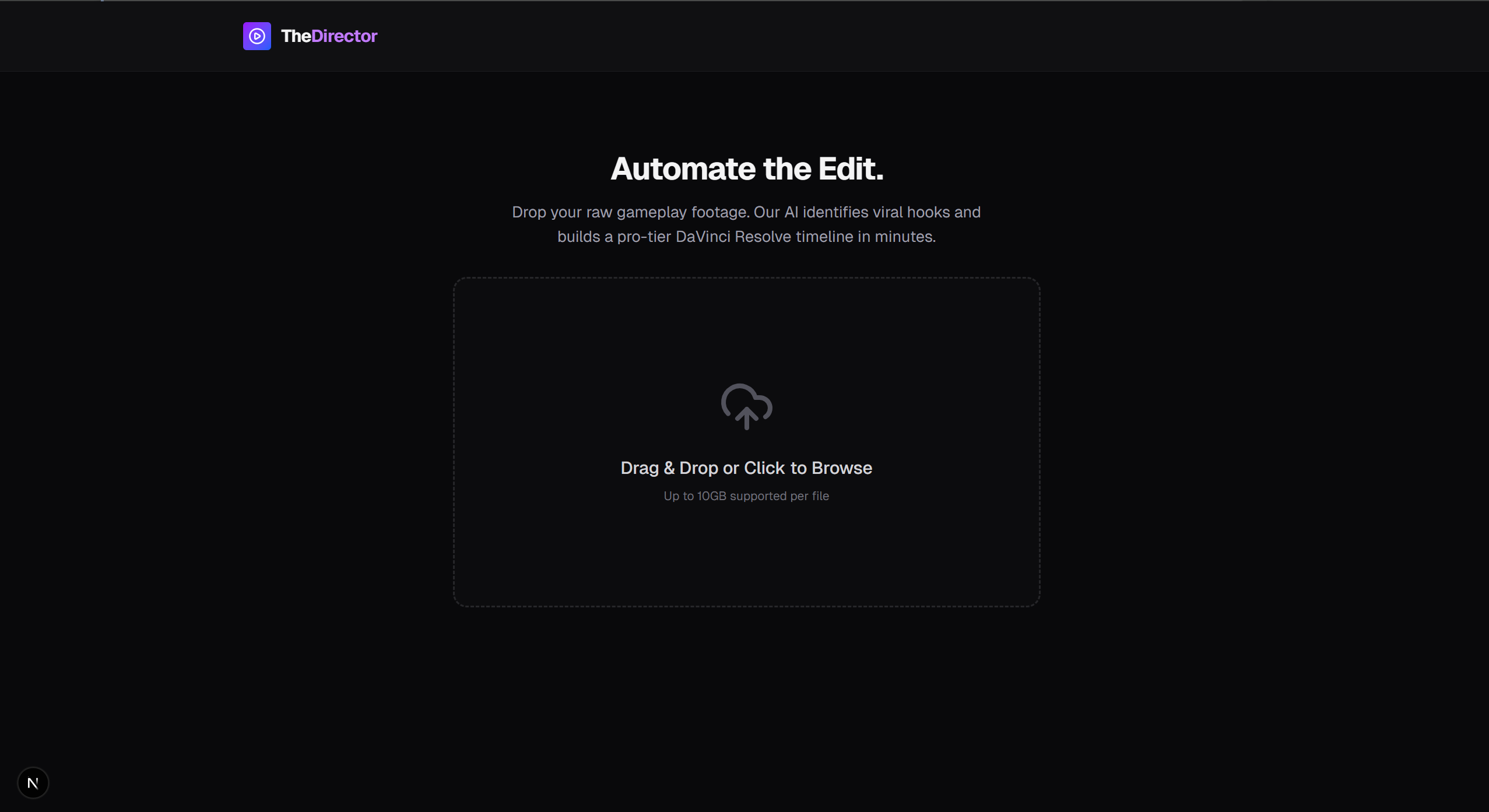
The Director
Manually indexing and editing multi-hour video files creates a massive operational bottleneck. Traditional NLEs (Non-Linear Editors) require real-time human review, making high-volume content pipelines impossible to scale efficiently.
A decoupled, asynchronous processing engine. A FastAPI backend handles FFmpeg chunking to bypass memory limits, while a concurrent LLM pipeline analyzes transcripts for narrative spikes. Output is dynamically serialized into FCPXML math for direct DaVinci Resolve timeline injection.
Inspect Node
Technical Implementation
- ■Architected an asynchronous processing pipeline handling gigabytes of video data.
- ■Implemented AI clip ranking using contextual LLM analysis.
- ■Built a real-time polling frontend dashboard with drag-and-drop functionality.
Architectural Tradeoffs
Realtime Operations Platform
SmartQR Menu
Traditional hospitality systems suffer from high operational latency between inventory changes and customer-facing menus. This leads to 'out-of-stock' friction and inefficient manual reconciliation across distributed staff devices.
A real-time synchronization engine built on Supabase. By leveraging PostgreSQL's Write-Ahead Log (WAL) and WebSocket broadcasting, I achieved sub-2-second state updates from the kitchen tablet to the customer's screen over live cellular networks.

Inspect Node
Technical Implementation
- ■Integrated Supabase Realtime for automatic cross-device syncing.
- ■Built a low-latency, mobile-first UI for immediate customer access.
- ■Designed a simplified operations dashboard for instant inventory toggling.
Architectural Tradeoffs
Browser Extension & AI Verification Engine
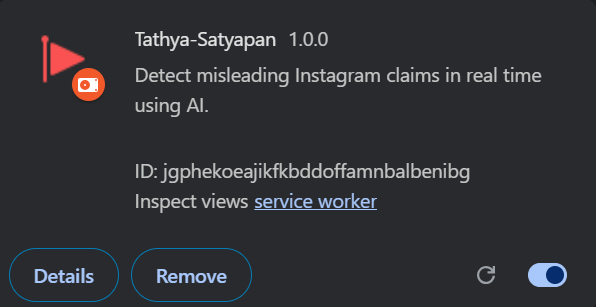
Tathya-Satyapan
Social media is saturated with unchecked, highly viral misinformation. Building an extension to combat this on infinite-scroll SPAs usually results in massive memory leaks and scrolling stutter (layout thrashing).
An AI-powered Chrome extension that actively monitors DOM mutations on Instagram. By implementing aggressive garbage collection and local caching, it verifies claims using the Gemini API while strictly capping memory overhead.
Inspect Node
Technical Implementation
- ■Engineered a highly performant DOM monitoring system using MutationObserver and IntersectionObserver.
- ■Profiled V8 engine heap snapshots to ensure aggressive garbage collection, capping memory overhead at ~60MB during heavy infinite scrolling.
- ■Injected visual warning badges using DocumentFragments to prevent main-thread layout thrashing.
Architectural Tradeoffs
Active Research
AI Job Copilot
Designing a modular AI system that analyzes job descriptions, computes candidate-job fit scores, and generates tailored resumes using strictly truthful user data. Currently architecting scalable backend pipelines using FastAPI, PostgreSQL, vector embeddings, and Playwright for intelligent automation.